
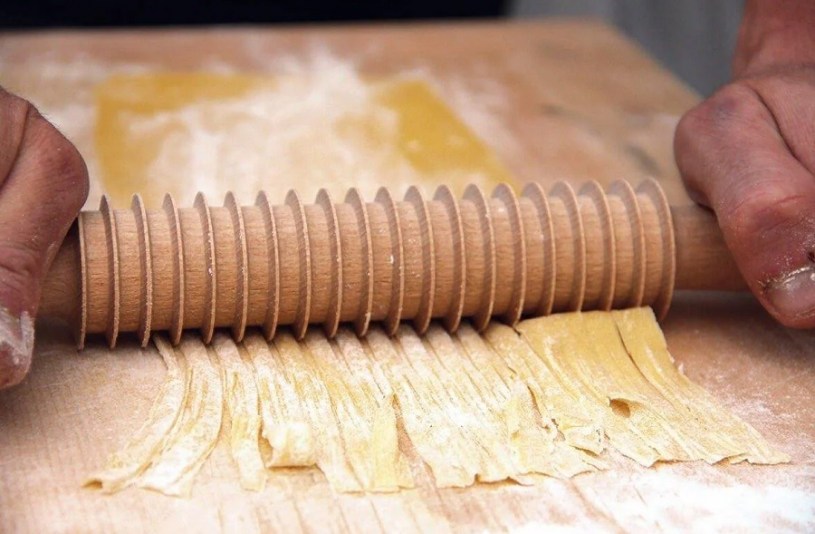
In the last five years, the search for good pasta in Singapore has become less about Googling Italian restaurants and more about discovering the art of craft — of flour, water, and human hands working in quiet resistance to convenience.
It’s a strange and wonderful thing, watching this city — driven by digital queues, high-speed MRTs, and cashless everything — turn its attention toward something as ancient and tactile as handmade pasta. But the appetite is real, and it’s rising.
A Brief History of Something Deliciously Stubborn
Pasta’s origins are hotly debated — was it Marco Polo bringing back noodles from China, or the Arabs introducing dried pasta to Sicily? Regardless, what we know is that pasta was never meant to be fast. The earliest versions were labour-intensive and seasonal. Dough was kneaded by hand, cut by instinct, and dried slowly under the Mediterranean sun.
Fast forward to today, and the narrative has flipped in the most unexpected way — Singapore, a city of glass towers and hawker queues, is turning back to that slower form of making. A renaissance of sorts. And it’s not just nostalgia; it’s a new culinary language being written, one dish at a time.
Why Handmade Pasta Appeals to Singaporeans Now
You’d be forgiven for thinking that a dish like tortellini wouldn’t take root here. But Singaporeans are nothing if not exacting — we appreciate technique, texture, and the power of a good sauce-to-noodle ratio.
So why the growing love for handmade pasta?
- A craving for authenticity in a world of shortcuts.
- An understanding of food as experience, not transaction.
- An evolved palate trained on local noodle dishes with rich broths and bold flavour pairings.
In a Singapore Food Trends 2024 report, 64% of diners aged 25–40 said they were willing to pay more for dishes described as “handmade” or “crafted in-house”. That’s not a trend. That’s a value shift.
Where to Find the Handmade Pasta Movement
You don’t need to go far to find it — it’s in the small eateries of River Valley, in the cosy kitchens of Jalan Besar, and increasingly, in food delivery boxes lovingly packed with homemade rigatoni ready to be cooked in your own home.
Here are a few names changing the game:
- Forma (Katong) – A neighbourhood pasta house that makes their pasta daily using traditional Italian methods. Their orecchiette is a lesson in restraint.
- Pasta Brava (Craig Road) – One of Singapore’s longest-standing Italian restaurants, offering authentic handmade favourites with a legacy of loyal locals.
What’s exciting is not just that these places exist, but that new ones keep appearing — sometimes in malls, sometimes in refurbished shophouses, sometimes run by ex-bankers turned dough evangelists.
Pasta Through a Singaporean Lens
And then there’s fusion — not in the gimmicky sense, but as a natural evolution. Singapore doesn’t just copy the Italian cookbook; it adds new chapters.
Imagine:
- Charred laksa pasta sheets in a delicate lasagne
- Ulam pesto folded into handmade tagliatelle
- Black garlic tortellini served with kampung chicken jus
It’s inventive, yes, but also deeply rooted in our culture of borrowing, blending, and reimagining.
More Than a Trend — A Return to Touch
In a world obsessed with screens, algorithms, and sterile perfection, handmade pasta is delightfully analog. It can be imperfect. It changes with humidity. It responds to the warmth of the maker’s hands.
To eat handmade pasta in Singapore today is not just to indulge — it’s to participate. To be reminded of what it means to feel, to wait, to chew with intent. It’s the kind of food that asks you to slow down, even if only for 45 minutes over lunch.
So the next time you scroll past another food post, resist the urge to swipe. Stop. Go. Sit in front of a steaming bowl of something coiled, buttery, and barely clinging to al dente. Taste it properly.
Because in this modern city of endless innovation, the true luxury now is something made by hand. Something honest. Something quietly brilliant — like handmade pasta in Singapore.
 Yuummy Food Blog