
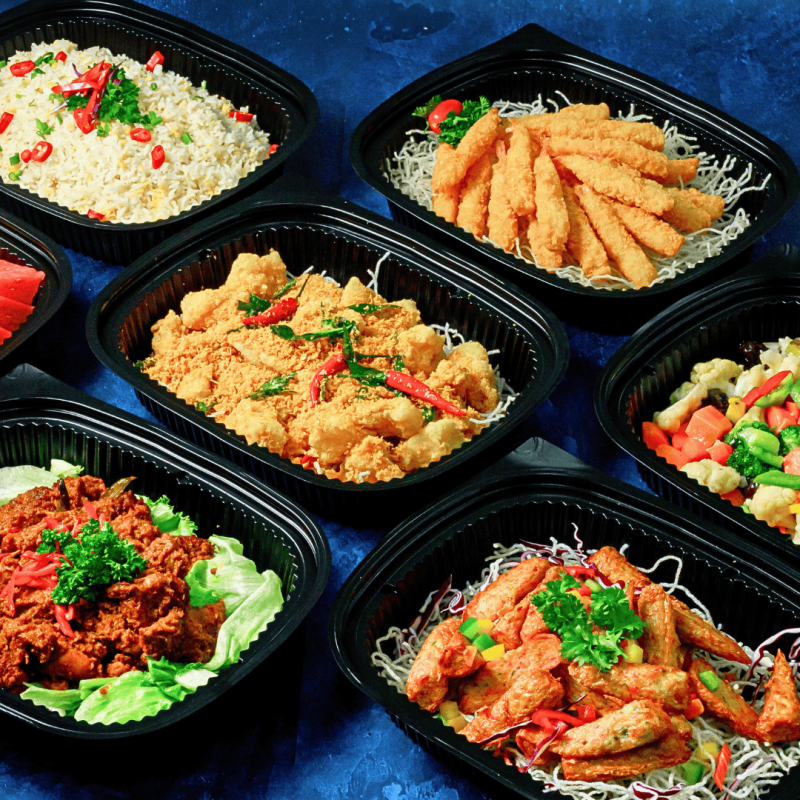
Two orders leave the same kitchen on a Saturday morning. One is headed for a twelfth-floor meeting room where a project team is working through the weekend. The other is going to a four-room flat where a grandmother turns eighty. Both customers typed halal mini buffet singapore into a search bar and chose a similar set. What each needs from it is quite different, and following the two side by side shows where an office order and a family order part ways.
Fifteen Colleagues and a Deadline
The office group wants lunch to interrupt work as little as possible. Nobody will linger. People will fill a plate, return to their laptops and perhaps come back for seconds an hour later. The organiser, usually the most junior person in the room, has a budget ceiling, a list of who eats what and no authority to move furniture. Success here means food that arrives on time, can be eaten with one hand and leaves no smell in the carpet.
Twenty Relatives and a Birthday
In the flat, the meal is the event. Guests span four generations, from a toddler to the birthday lady’s own elder sister. They will arrive in waves over two hours, sit wherever there is a seat and expect to be pressed to eat more. The host is a daughter who also has to manage the cake, the photographs and an uncle who always comes early. Success here means dishes the eldest recognise, enough rice, and nothing that keeps her in the kitchen.
Why Certification Matters to Both
Each group includes Muslims, and in each case the organiser is not one of them. That makes the caterer’s status more important, not less, because guests cannot easily quiz the host about ingredients. Certification from Muis, shown on a current certificate, lets a Muslim colleague or in-law eat without awkward questions. Both organisers checked it before ordering. A menu that merely avoids pork would have left some guests politely holding an empty plate.
Choosing Dishes for a Desk
For the office, dry beats wet. Fried rice or noodles, boneless chicken, a vegetable that is not swimming in sauce and a finger-sized snack travel well from table to keyboard. Curries with thin gravy and anything on the bone do not. Going through mini buffet options for small teams with that filter removes about half the dishes at once. The organiser also avoided strongly scented items, since the meeting room would be in use all afternoon with the door shut.
Choosing Dishes for a Living Room
At home the logic reverses. Gravy is welcome because there is rice to carry it and time to sit. The daughter picked a curry, a braised dish soft enough for elderly teeth, a plain stir-fried vegetable for the children and one fried favourite that disappears first at every family party. She added a dessert the birthday lady likes. Spice was kept moderate, with sambal on the side, so that grandchildren and great-aunts could each adjust their own plate.
Getting the Trays Upstairs
The office delivery met a security desk, a visitor pass and a goods lift that is locked on weekends unless booked. The organiser had sent the driver’s details to building management on Friday, so the handover took five minutes. The flat had no such barriers, only a multi-storey car park and a lift that stops on every floor. There, the useful preparation was simpler: a cleared dining table, the unit number sent by message, and a nephew posted downstairs to help carry.
Timing Around the Label
Both orders carried the caterer’s label stating when the food was cooked and the hour by which it should be finished. The team ate within forty minutes, so the limit never mattered, though latecomers were told not to save a box for dinner. The family party ran longer. The daughter set out half of each tray first, kept the rest covered, and topped up once. When the labelled time came, she cleared what remained despite protests about waste.
How Much Was Enough
The office ordered for exactly fifteen and had a little left, because two people skipped lunch for a call. The family ordered for twenty-two although twenty were invited, since relatives eat generously at celebrations and one cousin brought a friend. Both judged well. Set menus are portioned for an average appetite at an ordinary meal. A working lunch runs slightly under that. A birthday runs over. Adjusting the headcount by one tier is cheaper than sending someone out for extra rice.
What Each Organiser Would Change
Asked afterwards, the office organiser said she would request serving tongs for every tray, as two dishes shared one spoon and the queue stalled. She would also bring a roll of bin bags from home. The daughter said she would order drinks with the set instead of buying cartons separately, and would label the spicy dish for the children. Neither regretted the format. Disposable trays meant no equipment to return, and for both that was the deciding convenience.
Which Order Is Yours
Before choosing, decide which of these two gatherings yours resembles. If people will eat quickly and go back to something else, favour dry, tidy, mild dishes and plan the building access. If the meal is the occasion, favour gravies, soft textures and a dessert, and order one tier up. In either case confirm the certificate, collect dietary needs and read the time label on arrival. Then look through halal mini buffet menus for small gatherings and pick with your own guests in mind.

